
-

PhD position vacancy on urban sound modelling for Urban Air Mobility perception studies
How will future Urban Air Mobility (UAM) vehicles sound and how will UAM be perceived in our cities? If exploring that question excites you, we have an opportunity you’ll want to consider. The purpose of the project is the predict the sound of UAM vehicles in real urban settings. We target to arrive at a prediction model that provides…
-
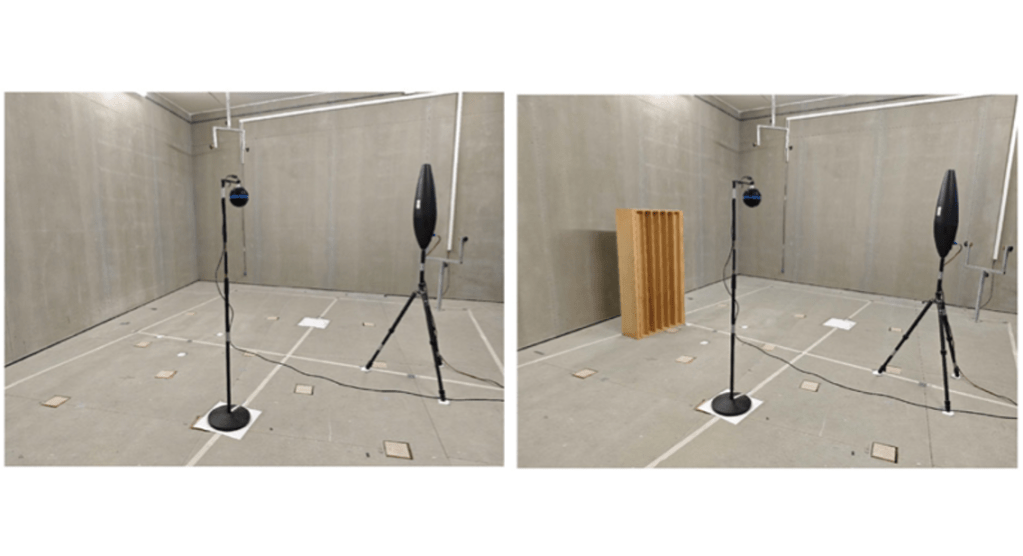
JASA paper on directional coherence loss coefficients
We’re excited to share our latest work:“Directional coherence loss coefficients for characterizing scattering distributions in enclosures” (JASA, Jan 2026), by Dingding Xie, Wouter Wittebol and Maarten Hornikx In this paper, we introduce Directional Coherence Loss Coefficients (DCLCs), a new way to quantify how strongly directional sound field coherence is lost due to localized scattering inside rooms, from the receiver’s…
-
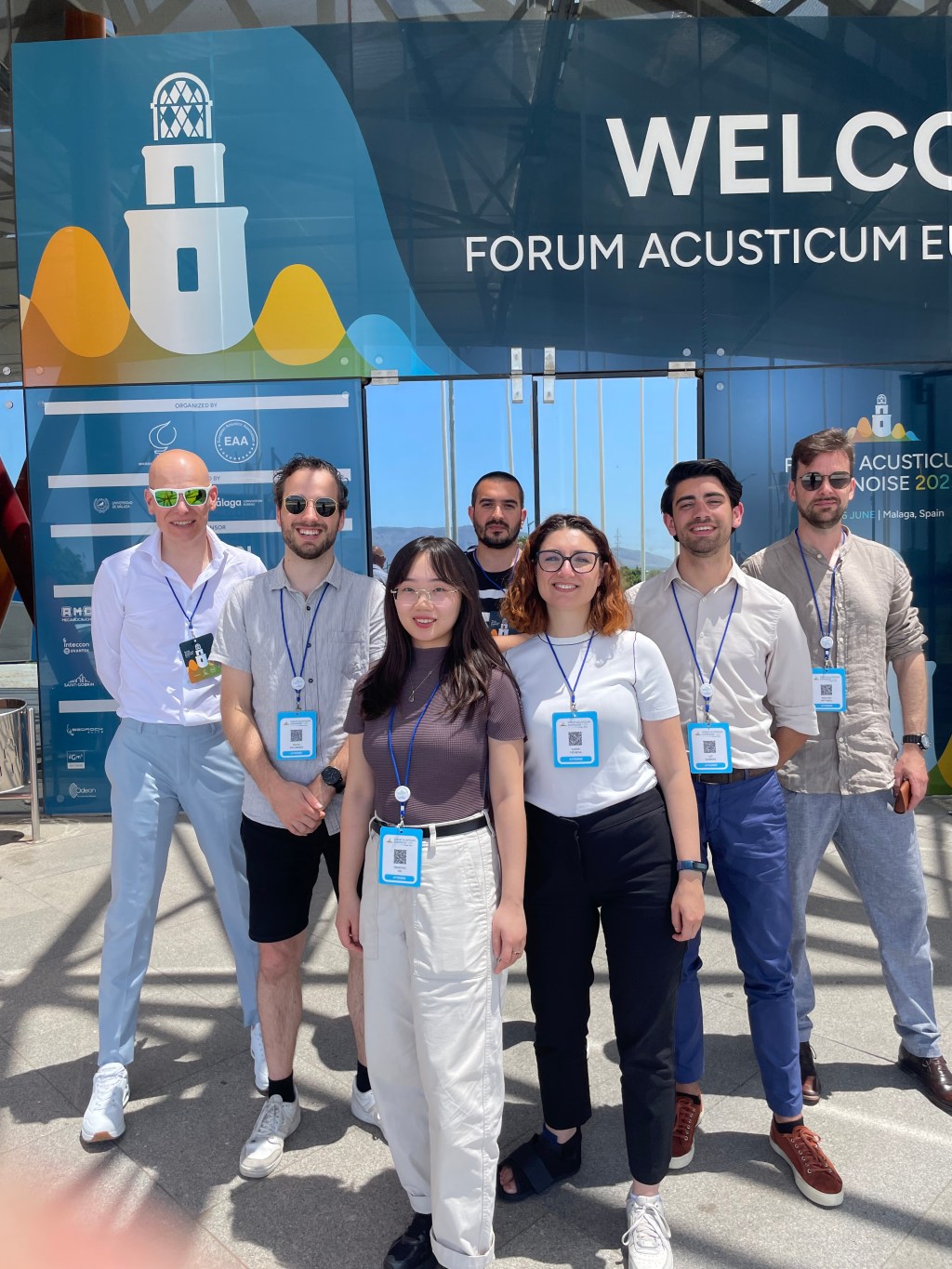
Building Acoustics team shares research outcomes at Forum Acusticum Euronoise in Malaga
In June 2025, members of the Building Acoustics team have presented results from their research at t Forum Acusticum Euronoise in Malaga. In total, 8 papers were presented, and can be accessed via the links below: 🔹 Comparing Open Source Room Acoustics Simulation Tools: Performance and Usability InsightsLuc Dijkman, Niels Hoekstra, Maarten Hornikxpaper: https://lnkd.in/d3hyHFND 🔹 A neural…
-

Novel approach to quantify and model scattering effects in room acoustics
We’re excited to share our latest paper, “A Method for Extracting an Average Scattering Coefficient for Room Acoustic Modeling”, published in Applied Acoustics, by Dingding Xie, Wouter Wittebol, Qi Li, and Maarten Hornikx. This study introduces a novel approach to quantify and model scattering effects in room acoustics (including scattering of objects), enabling accurate and computationally efficient…
-
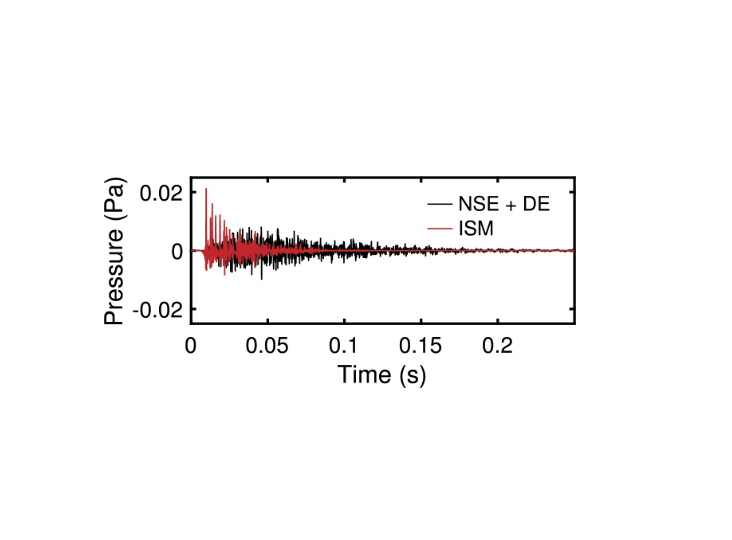
Hybrid model for room acoustics
🔊 Exciting research alert! We’ve developed a hybrid model for room acoustics that bridges the gap between different modeling techniques to provide a comprehensive understanding of how sound behaves in various environments. Our approach combines three methods:– Image Source Method for high-frequency sound reflections.– Acoustic Diffusion Equation for transitioning to a more diffused sound field at high…
-
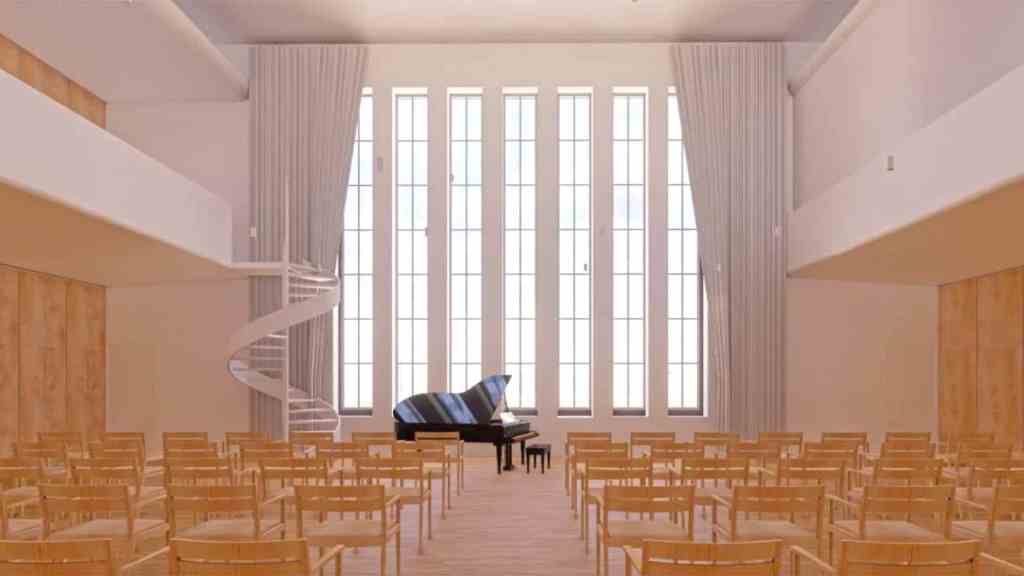
Eindhoven Acoustic Virtual Reality (EAVR) platform at Dutch Design Week
From 21 to 29 October at Ketelhuisplein at Strijp-S Eindhoven, TU/e again has its Dutch Design Week exhibition called Drivers of Change. We are delighted to present or Acoustic Eindhoven Acoustic Virtual Reality (EAVR) platform there! Are you interested in the influence of different materials on the acoustics in a restaurant environment or a concert hall,…
-

Unlocking the impact potential of research software in acoustics
The Building acoustics group has been granted an NWO open science fund project that enables the group to continue on its way to promote open research software. The project aims to foster a culture change regarding good practices in open science regarding the development and dissemination of research software in acoustics. Furthermore, it aims to…
-

PhD vacancy on modelling for perception of noise from urban air mobility aircraft in urban environments
Picture for inspiration from businesswire.com The Royal Netherlands Aerospace Centre NLR offers a great opportunity together with the TU/e. Interested in urban air mobility and the perception of noise? This PhD position might be your opportunity! As the project is hosted by NLR, all information and application details can be found at their website. Background…
-

PhD vacancy on modelling room acoustics via the diffusion equation
Are you interested to further develop a numerical model to model room acoustics, to be part ofa project on open source software development together with other researchers, acoustic consultants and (software) companies? Then apply no later than April 15 for this PhD position of the Building Acoustics group at Eindhoven University of Technology (TU/e) photo: Pongsagorn…
-
Funding for open source project on room acoustics
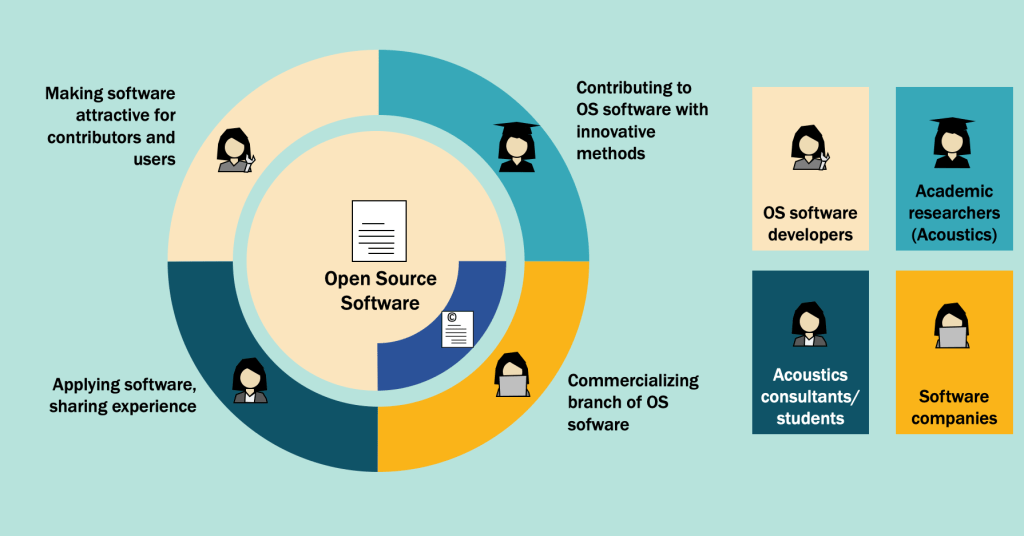
NWO has funded the research proposal A new era of room acoustics simulation software: from academic advances to a sustainable open source project and community. The project will start in 2022, headed by Maarten Hornikx and prof. Alexander Serebrenik. The research and utilization summary can be found below. Here is an interview about the awarded…
 Building Acoustics TU/e