
-

Building Acoustics team shares research outcomes at Forum Acusticum Euronoise in Malaga
In June 2025, members of the Building Acoustics team have presented results from their research at t Forum Acusticum Euronoise in Malaga. In total, 8 papers were presented, and can be accessed via the links below: 🔹 Comparing Open Source Room Acoustics Simulation Tools: Performance and Usability InsightsLuc Dijkman, Niels Hoekstra, Maarten Hornikxpaper: https://lnkd.in/d3hyHFND 🔹 A neural…
-

Novel approach to quantify and model scattering effects in room acoustics
We’re excited to share our latest paper, “A Method for Extracting an Average Scattering Coefficient for Room Acoustic Modeling”, published in Applied Acoustics, by Dingding Xie, Wouter Wittebol, Qi Li, and Maarten Hornikx. This study introduces a novel approach to quantify and model scattering effects in room acoustics (including scattering of objects), enabling accurate and computationally efficient…
-
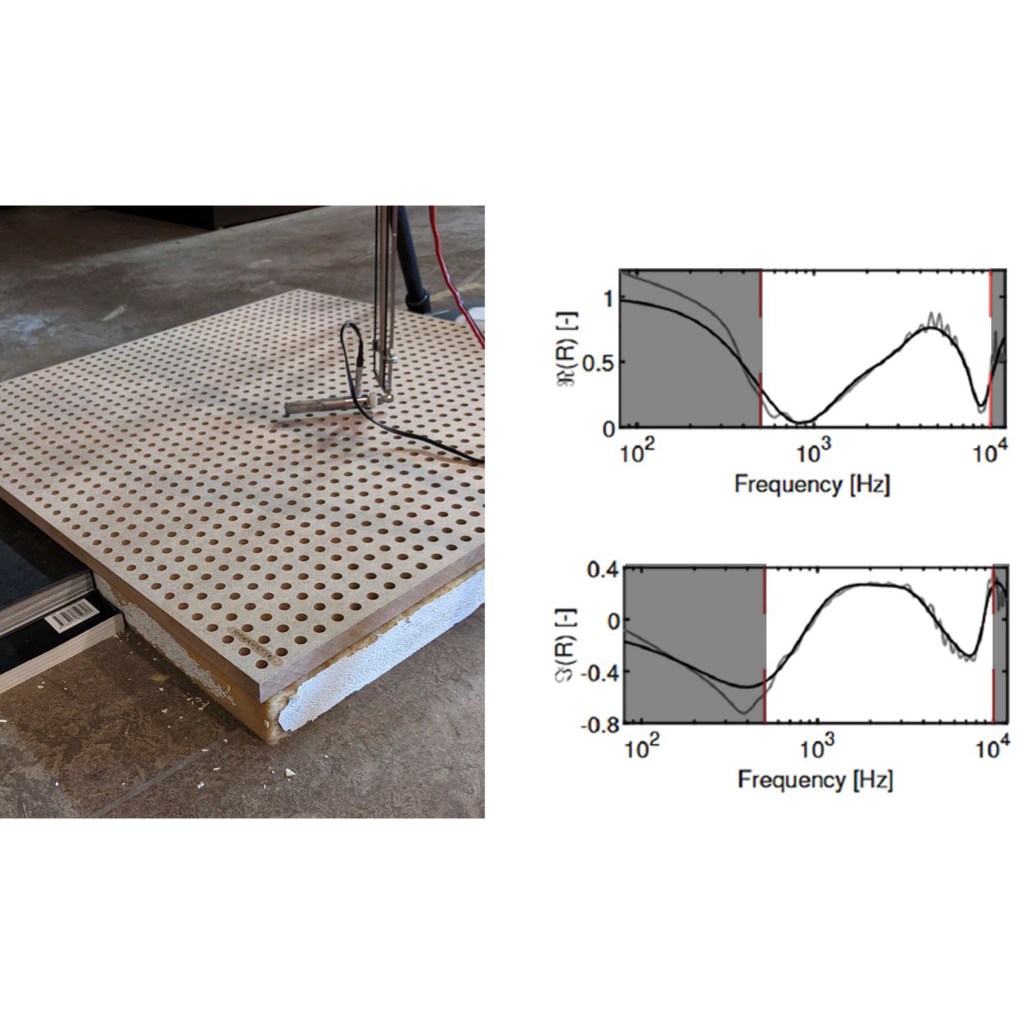
Paper on in situ acoustic characterization of a perforated panel on a cavity
One of the key challenges in room acoustics is accurately characterizing materials in situ—especially when traditional lab measurements aren’t feasible. This is particularly true for systems with perforated facings, which are commonly used but difficult to analyze outside controlled environments. Our latest research tackles this issue. We present a novel method for in situ characterization of rigidly-backed porous materials behind rigid perforated…
-
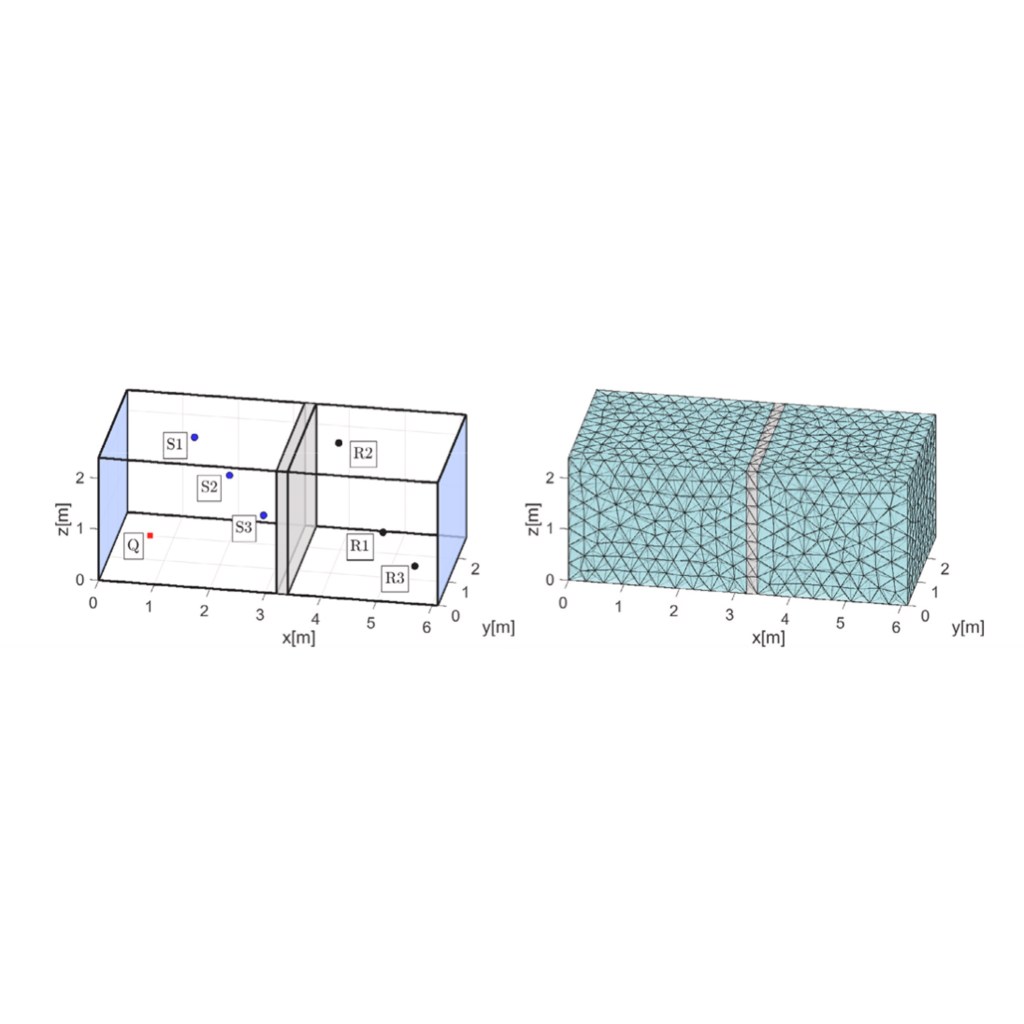
Sound radiation and transmission in buildings using the time-domain nodal discontinuous Galerkin method
📚 New Paper Alert! We are happy to share our latest research paper, where we explore innovative solutions for challenging vibroacoustic problems using the time-domain nodal discontinuous Galerkin (DG) method. This study addresses two key problems: – Impact Sound Radiation: We examine the sound radiation from a rectangular floor into a cuboid room, assessing normalized sound pressure…
-
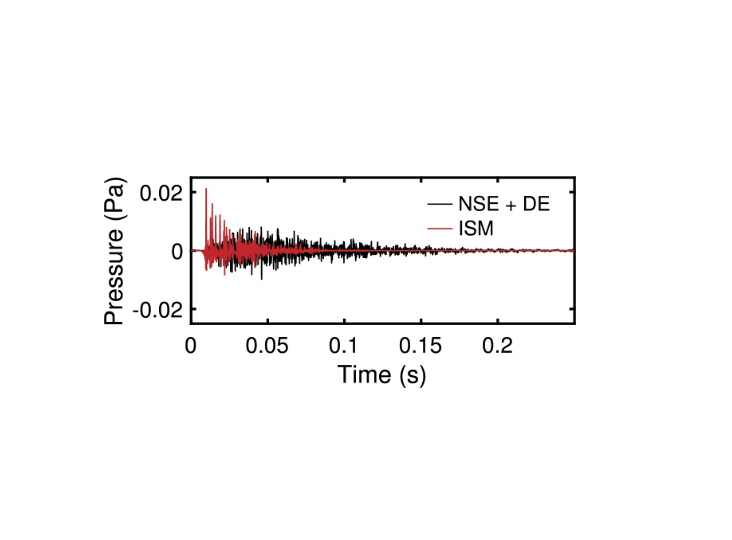
Hybrid model for room acoustics
🔊 Exciting research alert! We’ve developed a hybrid model for room acoustics that bridges the gap between different modeling techniques to provide a comprehensive understanding of how sound behaves in various environments. Our approach combines three methods:– Image Source Method for high-frequency sound reflections.– Acoustic Diffusion Equation for transitioning to a more diffused sound field at high…
-
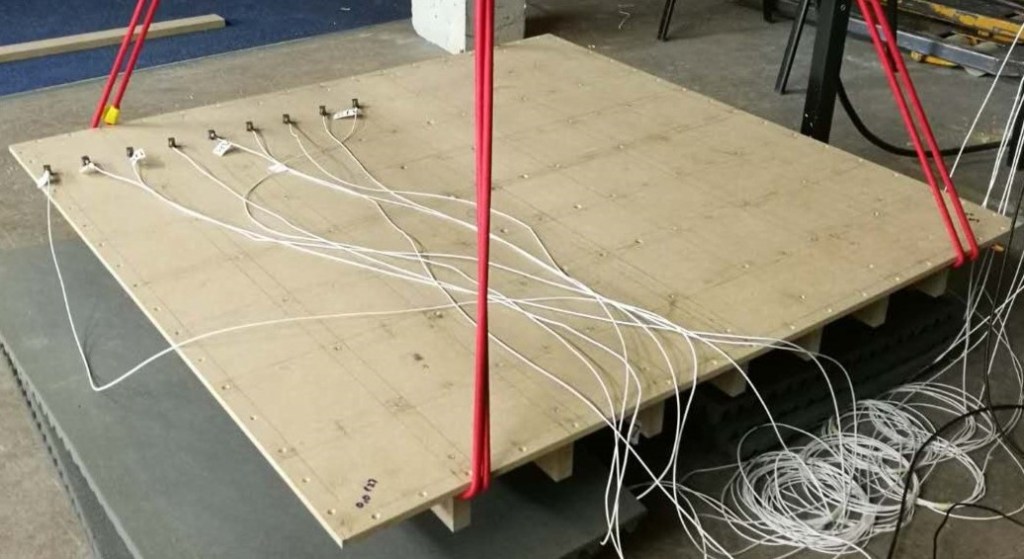
Paper on detailed modelling of impact sound vibrations in building structures
In our recently published Applied Acoustics paper, we used a method called the time domain nodal discontinuous Galerkin (DG) method to model how structures vibrate when they’re hit by an impact source. We focused on a lightweight wooden floor structure made up of different parts with different properties. To make sure our calculations were accurate,…
-
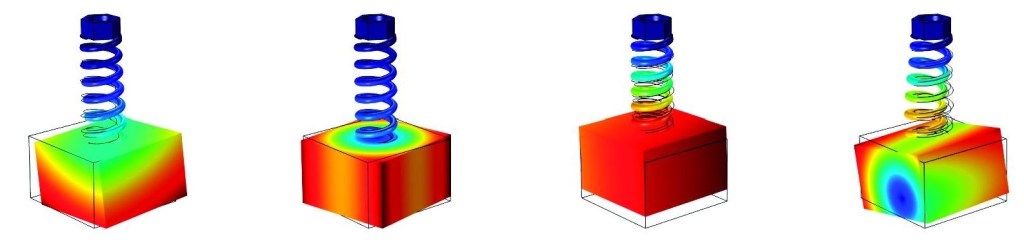
New paper: Analysing vibration absorbers in reducing low-frequency vibration of a floor-like lightweight floor: Comparison of experimental and computational results
When it comes to constructing lightweight structures, there are numerous benefits, such as using less material. However, one common issue with lightweight floor systems is that they tend to vibrate significantly at low frequencies. This vibration generates a lot of noise in the room below, causing annoyance. To address this problem without adding excessive weight,…
-
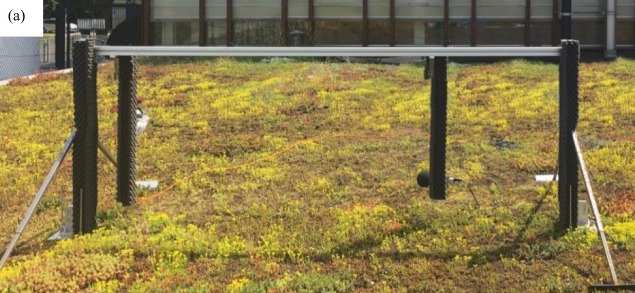
New approach to measure absorption of vegetated roofs
How much sound does a vegetated roof absorb? To answer that question an appropriate measurement method is needed. In our recently published Applied Acoustics paper by Chang Liu, Fotis Georgiou and Maarten Hornikx, the acoustic impedances of greens roofs were retrieved by fitting parameters of a surface impedance model by measurents on the roofs. It…
-
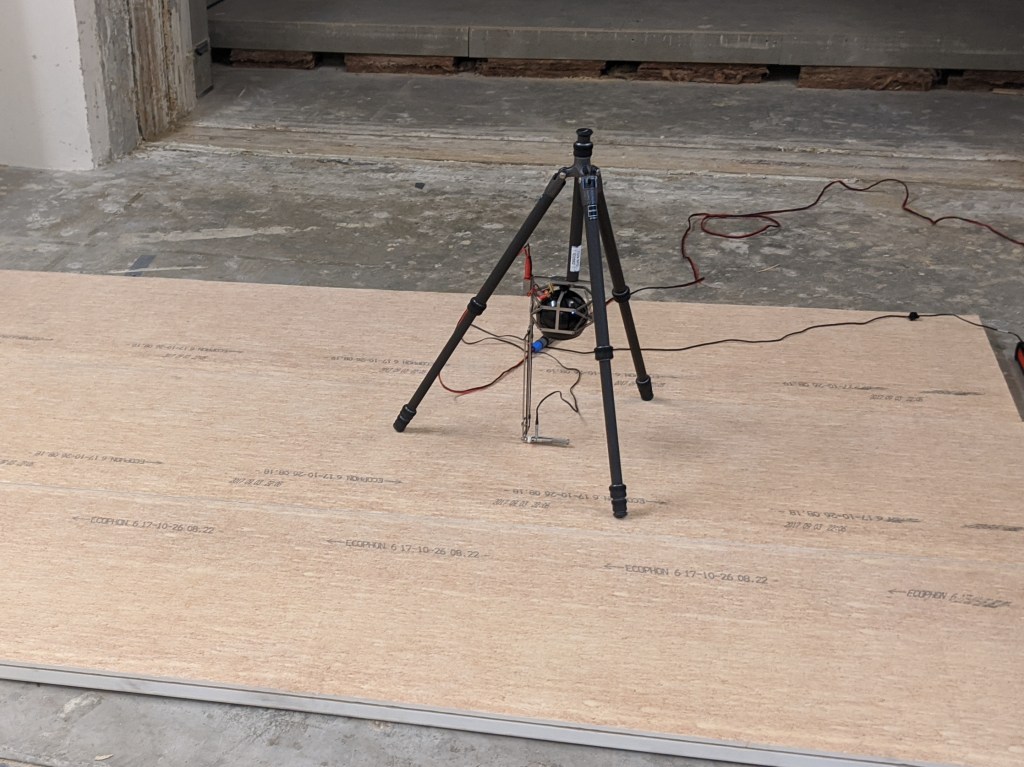
In situ acoustic characterization of a locally reacting porous material by means of PU measurement and model fitting
Reliable data on acoustical properties of materials are crucial for the design of a desired acoustic environment as well as to obtain accurate results from acoustic simulations. Although the acoustical properties of materials can be obtained via laboratory measurements, situations where in situ measurements are needed are often encountered. In our recent paper published in…
-
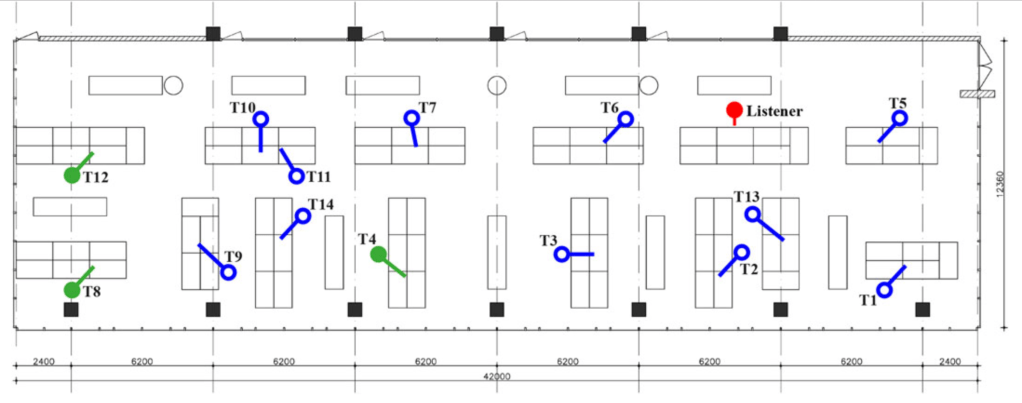
Effects of sound environment on performance of studying for an exam in an open learning environment.
One of the functions of open-plan study environments is to study for exams. The influence of the background noise, that is different number of people talking in the background and different room acoustic conditions, on the (perceived) performance of students is investigated here. First author Ella Braat-Eggen (with a PhD from our group) is working…
 Building Acoustics TU/e