
-
JASA paper on directional coherence loss coefficients
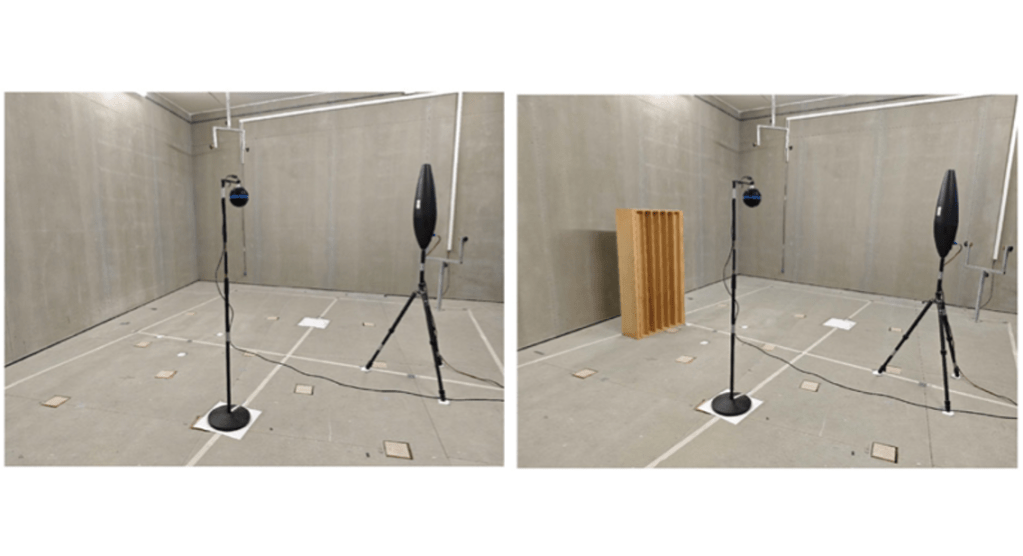
We’re excited to share our latest work:“Directional coherence loss coefficients for characterizing scattering distributions in enclosures” (JASA, Jan 2026), by Dingding Xie, Wouter Wittebol and Maarten Hornikx In this paper, we introduce Directional Coherence Loss Coefficients (DCLCs), a new way to quantify how strongly directional sound field coherence is lost due to localized scattering inside rooms, from the receiver’s…
-
Autumn updates on CHORAS
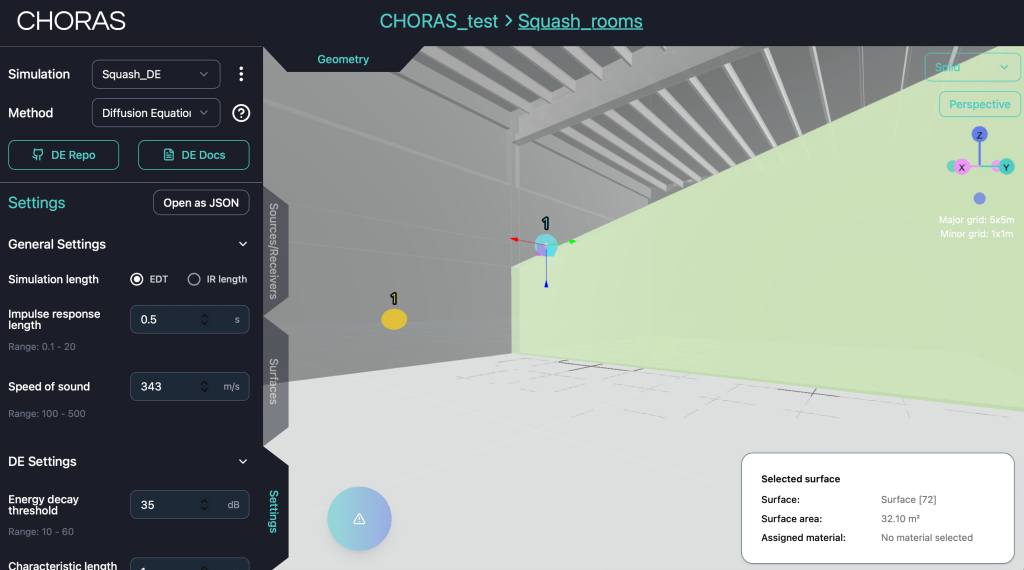
CHORAS is a web-based user interface that allows users to run open-source acoustic simulation methods directly in the browser. It brings multiple open-source acoustic simulation software together in one place — making your (and others’) open-source room acoustics methods accessible through a unified UI. Whether you’re a student, researcher, consultant, material manufacturer, developer, or simply acoustics-curious, CHORAS…
-

Novel approach to quantify and model scattering effects in room acoustics
We’re excited to share our latest paper, “A Method for Extracting an Average Scattering Coefficient for Room Acoustic Modeling”, published in Applied Acoustics, by Dingding Xie, Wouter Wittebol, Qi Li, and Maarten Hornikx. This study introduces a novel approach to quantify and model scattering effects in room acoustics (including scattering of objects), enabling accurate and computationally efficient…
-
Paper on in situ acoustic characterization of a perforated panel on a cavity
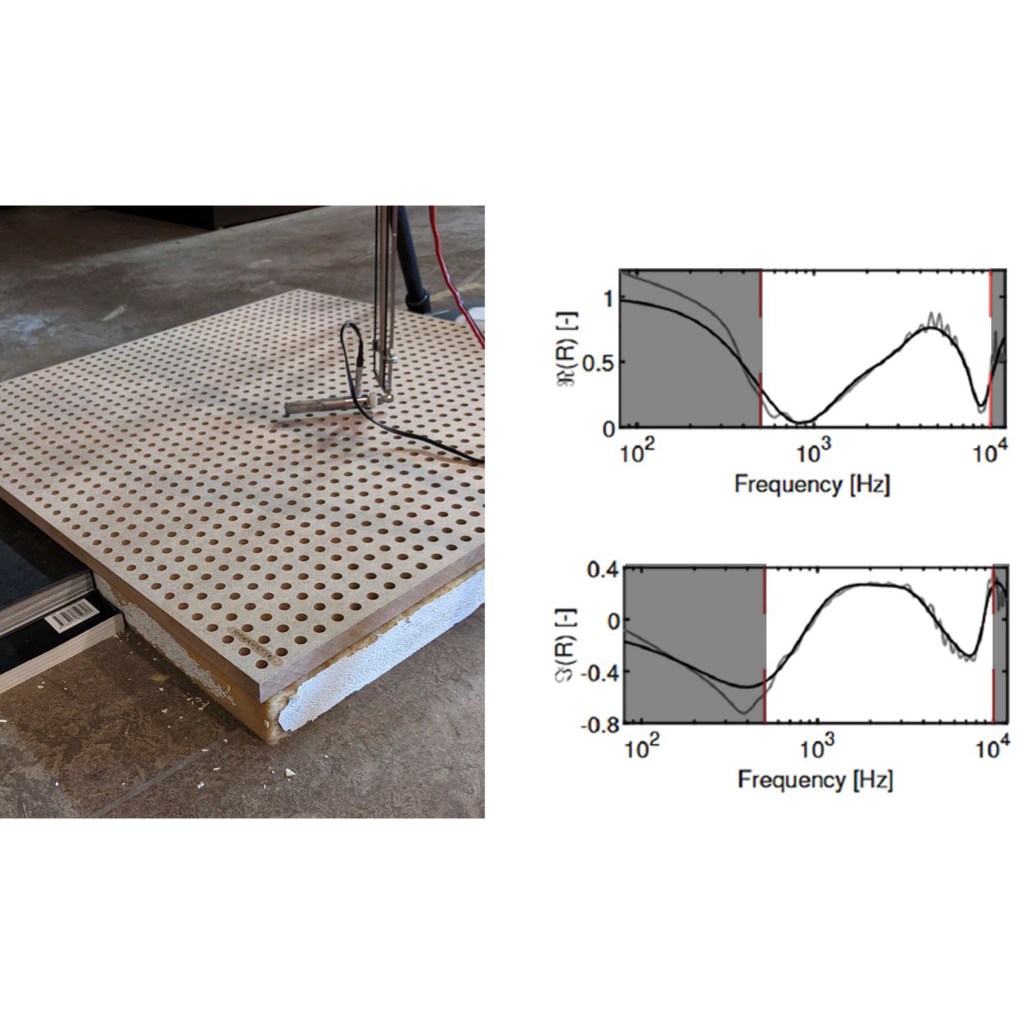
One of the key challenges in room acoustics is accurately characterizing materials in situ—especially when traditional lab measurements aren’t feasible. This is particularly true for systems with perforated facings, which are commonly used but difficult to analyze outside controlled environments. Our latest research tackles this issue. We present a novel method for in situ characterization of rigidly-backed porous materials behind rigid perforated…
-
Sound radiation and transmission in buildings using the time-domain nodal discontinuous Galerkin method
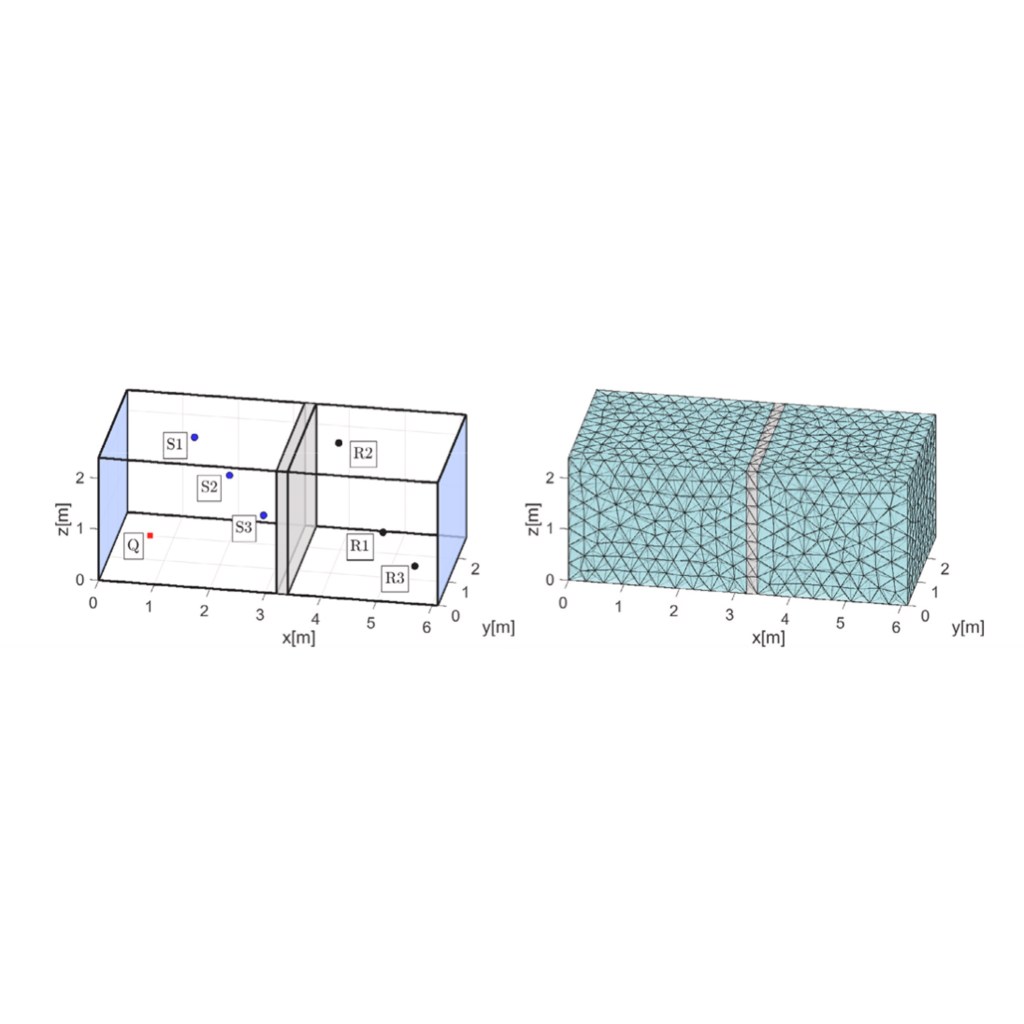
📚 New Paper Alert! We are happy to share our latest research paper, where we explore innovative solutions for challenging vibroacoustic problems using the time-domain nodal discontinuous Galerkin (DG) method. This study addresses two key problems: – Impact Sound Radiation: We examine the sound radiation from a rectangular floor into a cuboid room, assessing normalized sound pressure…
-
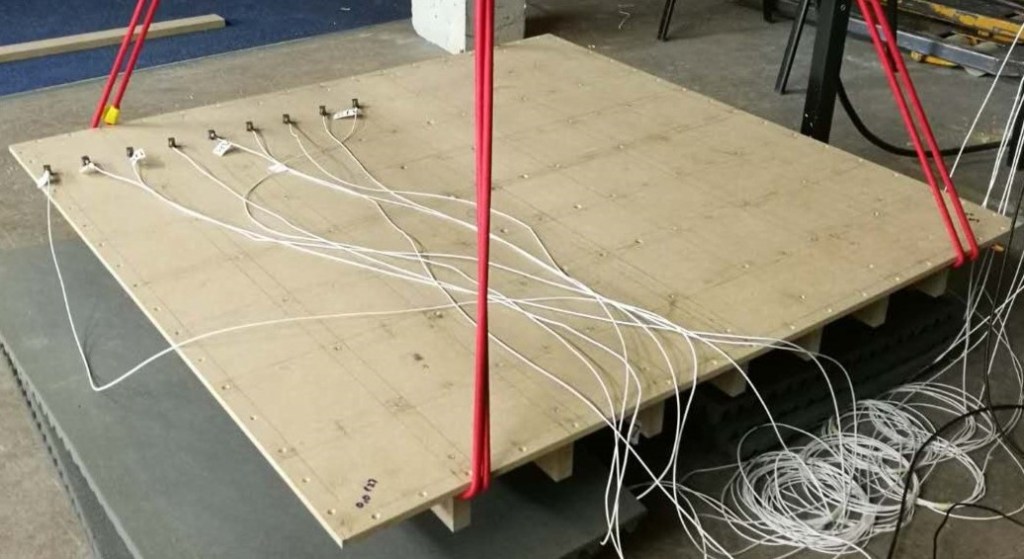
Paper on detailed modelling of impact sound vibrations in building structures
In our recently published Applied Acoustics paper, we used a method called the time domain nodal discontinuous Galerkin (DG) method to model how structures vibrate when they’re hit by an impact source. We focused on a lightweight wooden floor structure made up of different parts with different properties. To make sure our calculations were accurate,…
-
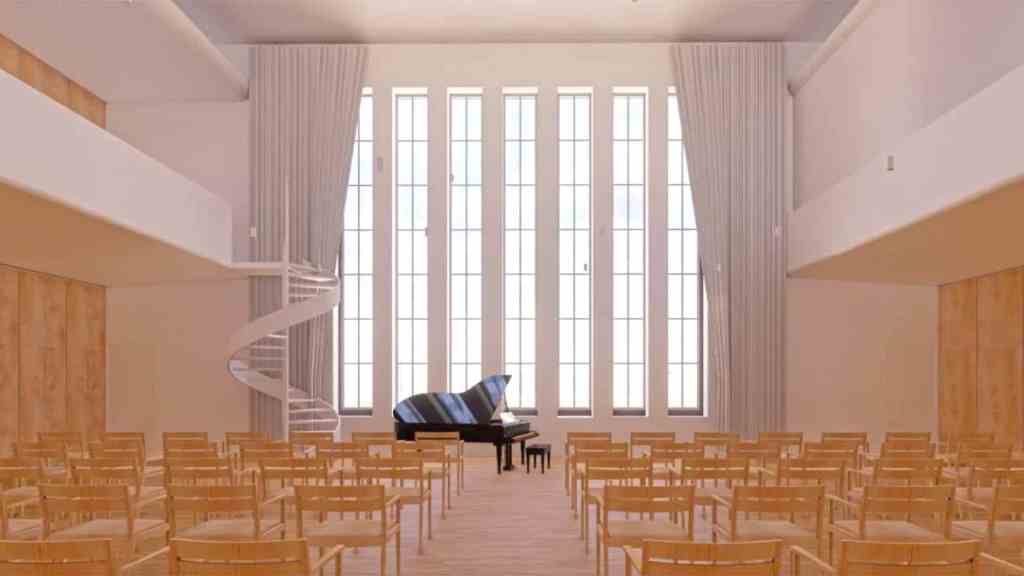
Eindhoven Acoustic Virtual Reality (EAVR) platform at Dutch Design Week
From 21 to 29 October at Ketelhuisplein at Strijp-S Eindhoven, TU/e again has its Dutch Design Week exhibition called Drivers of Change. We are delighted to present or Acoustic Eindhoven Acoustic Virtual Reality (EAVR) platform there! Are you interested in the influence of different materials on the acoustics in a restaurant environment or a concert hall,…
-
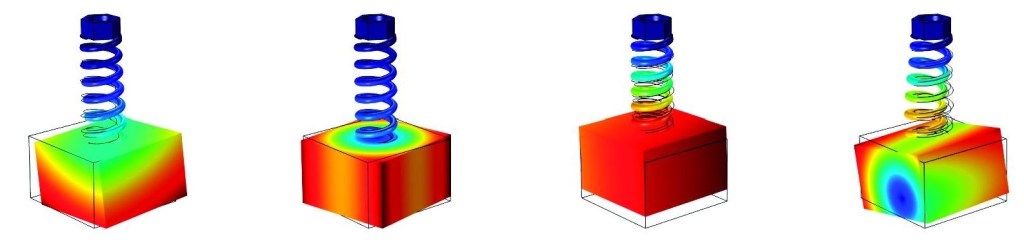
New paper: Analysing vibration absorbers in reducing low-frequency vibration of a floor-like lightweight floor: Comparison of experimental and computational results
When it comes to constructing lightweight structures, there are numerous benefits, such as using less material. However, one common issue with lightweight floor systems is that they tend to vibrate significantly at low frequencies. This vibration generates a lot of noise in the room below, causing annoyance. To address this problem without adding excessive weight,…
-
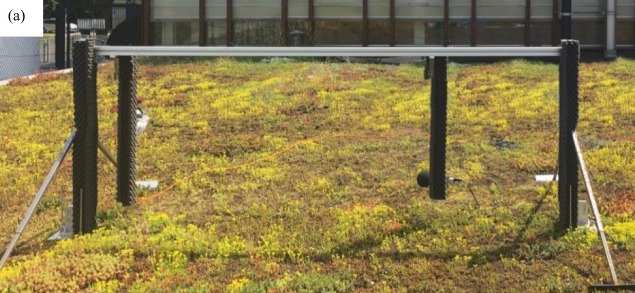
New approach to measure absorption of vegetated roofs
How much sound does a vegetated roof absorb? To answer that question an appropriate measurement method is needed. In our recently published Applied Acoustics paper by Chang Liu, Fotis Georgiou and Maarten Hornikx, the acoustic impedances of greens roofs were retrieved by fitting parameters of a surface impedance model by measurents on the roofs. It…
-
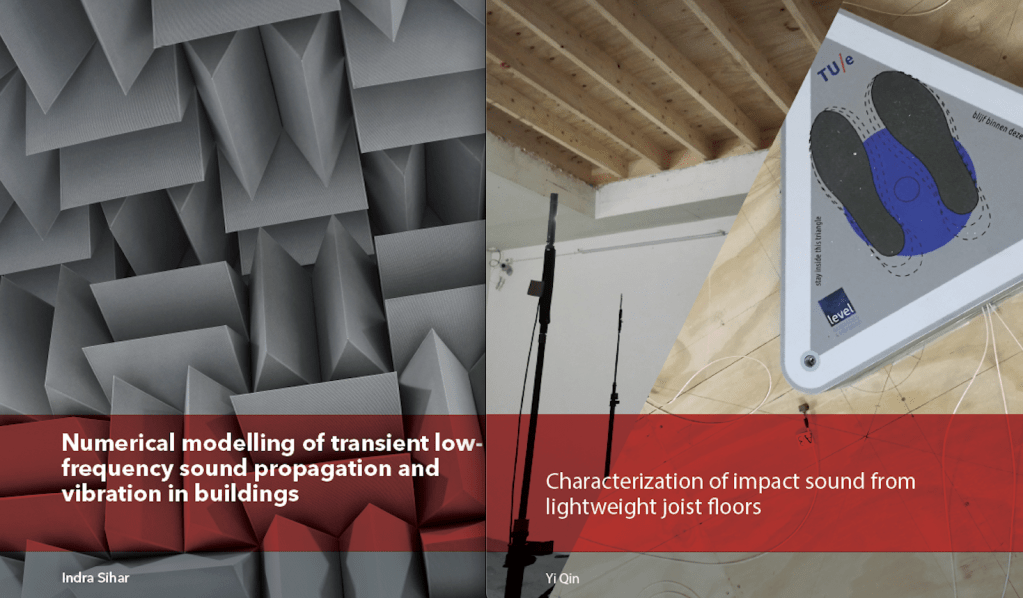
Two PhD defenses on Building Acoustics!
At July 1st, both Yi Qin and Indra Sihar will defend their PhD theses. applicable to other types of lightweight floors. Indra Sihar present his work titled: Numerical modelling of transient low-frequency sound propagation and vibration in buildings. His defense starts at 11AM sharp and can be attended online via this Teams link, or at…
 Building Acoustics TU/e